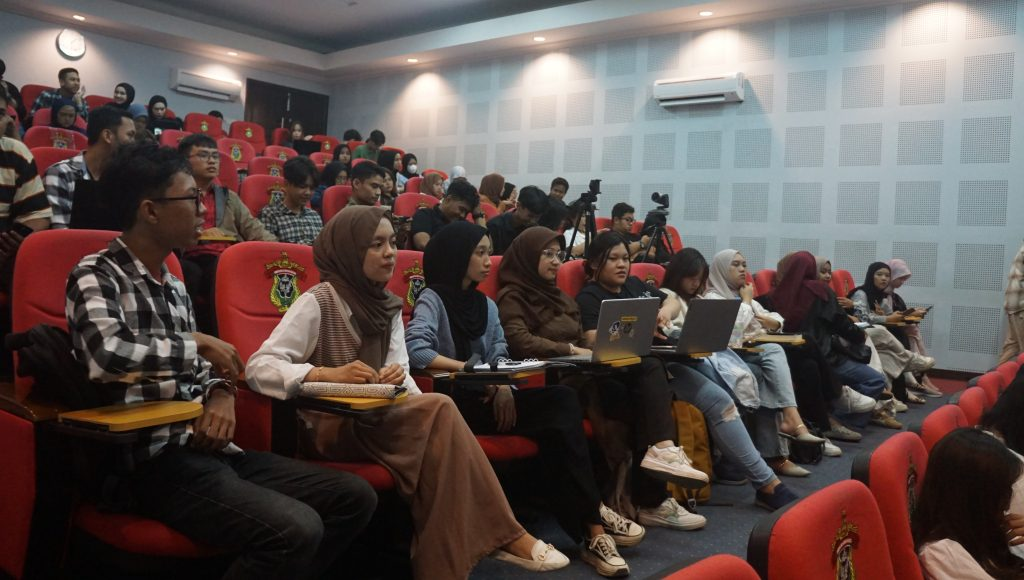
On Thursday, September 12, 2024, the second lecture of the Methodology Course delivered by Mr. Dr. G.A Moerman as one of the series of activities from the Adjunct Professor was held again. In this session, he discussed in more depth the approach in the interview process as a data collection tool and the Grounded Theory method while again discussing how important it is to combine various reasoning methods in research.
He emphasized that preparation is the key to success in conducting an interview. The interviewer must have a clear structure, well-formulated questions, and must be ready with a strategy to adjust the course of the interview according to the responses given. Dr. Moerman also explained the importance of probing or efforts to dig up further information. This probing can be directive, where the interviewer directs the conversation in a certain direction, or non-directive, which allows the respondent to respond more freely.
Power dynamics are also something that can occur in an interview. These dynamics play an important role in determining how information is obtained. In some situations, the interviewer knows more about the topic than the respondent, but in other situations, the respondent may know more about the topic, and the interviewer’s role is to facilitate the exploration of that information. Students are also introduced to two different perspectives in interviews, namely interviews as tunnels that focus on strengthening instruments and interviews as topics that focus on the results of the interview process carried out.
The last session of this lecture discussed grounded theory, which is an innovative method that allows researchers to develop theories based on data collected during research by emphasizing constant comparison, where the collected data is continuously compared with the theory being developed. The question and answer session also closed the second lecture that was held. The enthusiasm of the students seemed to increase, indicating an increase in student interest and understanding since the first lecture was held on the previous Friday, which of course is a good sign for achieving the objectives of this program.