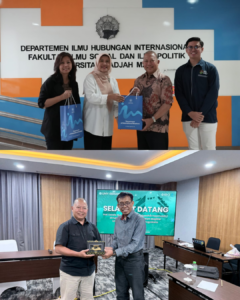
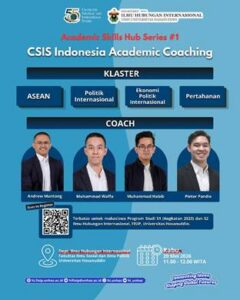
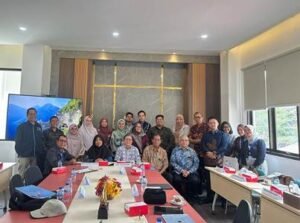
MAKASSAR — Master of International Relations (IR) Program, Faculty of Social and Political Sciences, Hasanuddin University (Unhas), successfully conducted academic benchmarking visits to two leading universities in Indonesia: the Master of IR Program at Gadjah Mada University (UGM) on May 21, 2026, and the Master of IR Program at Muhammadiyah University of Yogyakarta (UMY) on May 22, 2026. This visit is a strategic step aimed at curriculum development, refining the thesis process, and opening opportunities for mutually beneficial academic collaboration.
This benchmarking activity is part of the ongoing efforts by the Master’s Program in International Relations at the Faculty of Social and Political Sciences, University of Hasanuddin, to ensure the relevance and competitiveness of its curriculum at both the national and international levels. Through direct dialogue with both partner institutions, the team from the Master’s Program in International Relations at the Faculty of Social and Political Sciences, University of Hasanuddin, successfully gained a comprehensive understanding of best practices in the delivery of graduate education in the field of International Relations.
Following the Example of UGM’s Competency-Based Curriculum Model
During their visit to UGM, the team from the Master’s Program in International Relations at the Faculty of Social and Political Sciences, University of Hasanuddin, gained valuable insights into the implementation of the K24 Curriculum, which integrates an Outcome-Based Education (OBE) approach. This curriculum sets a course load of 100 ECTS credits (equivalent to 60 SKS) with a structured concentration track from the very beginning—covering the MAIR and DTC concentrations—ensuring that students have a clear academic direction from their first day of classes.
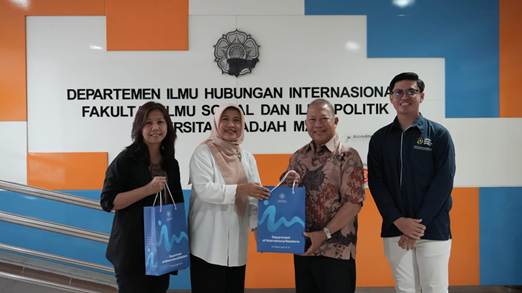
One of the standout innovations at UGM is the Thesis Writing Workshop (WPT) program, a required course in the second semester designed to guide students from the proposal drafting stage through to the thesis proposal seminar. This system has proven effective in aligning the expertise of academic advisors with students’ research topics, while ensuring the quality of the resulting theses.
Adoption of UMY’s Scientific Publication Mechanism
Meanwhile, the visit to UMY offered a different yet equally valuable perspective. UMY’s Master’s program in International Relations, which has earned “Excellent” accreditation as well as FIBAA international accreditation in 2024, requires students to publish a scientific paper as a mandatory graduation requirement. Students are required to have an article accepted or published in a reputable journal with a minimum SINTA 2 ranking, or even a Scopus-indexed journal, as an integral part of their final thesis.
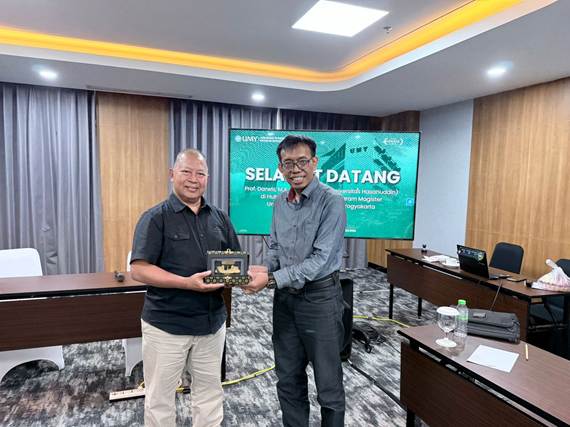
Interestingly, UMY has successfully integrated a culture of research and publication into its course design. Several courses are designed with the requirement that students submit a scientific article as a course outcome. The best articles that are successfully published can even be counted toward fulfilling the requirements for the final thesis. This system, supported by data analysis training using software such as NVivo and Atlas.ti—which is held regularly every semester—has significantly increased student publication output.
Paving the Way for Strategic Cooperation
In addition to focusing on the curriculum and academic mechanisms, this benchmarking activity also resulted in a number of preliminary agreements that open up opportunities for concrete collaboration. With UGM, it was agreed to explore a faculty exchange program through a block-style guest lecture system or joint courses, particularly for courses with overlapping themes such as Perspectives in Global Politics. A memorandum of understanding will be coordinated at the dean’s office level of both institutions.
As for UMY, which views the partnership with Unhas as highly promising, it was agreed to follow up on the Cooperation Agreement (CA) as soon as possible in order to formalize the faculty and student exchange programs. This step is in line with the spirit of collaboration among universities to improve the quality of International Relations education in Indonesia.
This benchmarking initiative reflects the commitment of the Master of International Relations program at the Faculty of Social and Political Sciences, University of Hasanuddin, to continuously innovate and learn from the best practices of leading institutions. The findings and recommendations from this benchmarking will serve as valuable input in the process of revising and refining the curriculum, which is ultimately expected to produce outstanding, competitive graduates capable of making a tangible contribution to the dynamics of international relations in the global era.
Writer and Editor: Munif Arif Ranti