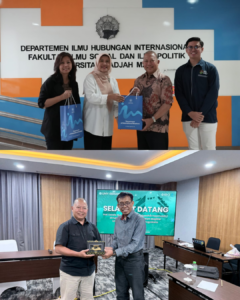
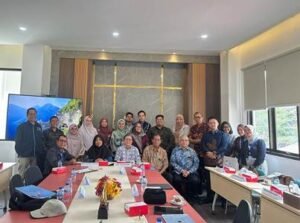
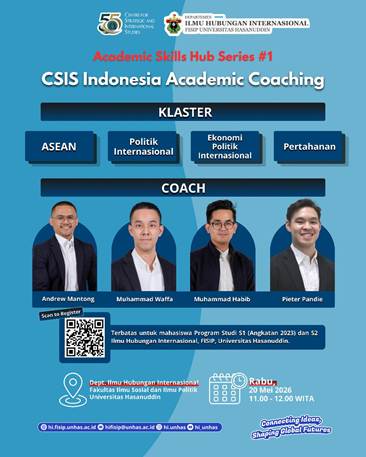
The Department of International Relations, Faculty of Social and Political Sciences, Universitas Hasanuddin (Unhas), organized an Academic Coaching session in collaboration with the Center for Strategic and International Studies (CSIS) on Wednesday, 20 May 2026.
This initiative was designed to provide a structured platform for academic consultation, support the development of students’ research and academic writing capacities, and facilitate knowledge exchange between CSIS Indonesia researchers and students of International Relations at Unhas. The program reflects an effort to bridge academic learning with policy-oriented research practices, thereby strengthening students’ analytical and methodological competencies.
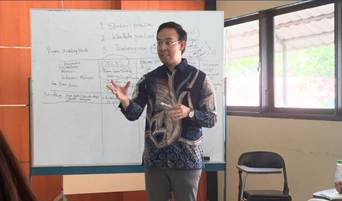
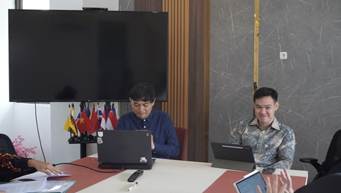
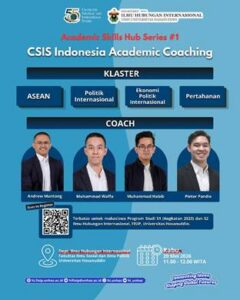
The session was delivered by Andrew Mantong, Muhammad Waffaa, Muhammad Habib, and Pieter Pandie, each contributing distinct perspectives within their respective areas of expertise. The Academic Coaching was structured into four thematic clusters, namely ASEAN, International Politics, International Political Economy, and Defense Studies. This clustering approach enabled more focused and tailored guidance, allowing students to engage deeply with topics aligned with their research interests and thesis development.
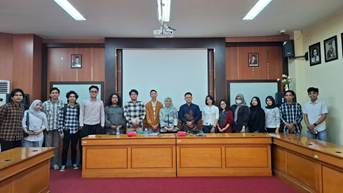
Through this activity, students were expected to gain substantive feedback to support the advancement of their undergraduate theses, alongside a more comprehensive understanding of contemporary issues in international relations and policy studies. Furthermore, direct engagement with experienced researchers provided valuable insights into research design, methodological approaches, and analytical frameworks relevant to current global dynamics. Beyond its immediate academic benefits, the program also served as a forum for dialogue and intellectual exchange, contributing to the strengthening of academic networks between CSIS Indonesia and Universitas Hasanuddin. In the long term, such initiatives are anticipated to foster a more collaborative and research-driven academic environment that supports the production of high-quality scholarly work.
Writer: Rhin Khairina Rahmat, S.IP, M.A
Editor: Munif Arif Ranti, S.IP, M.A