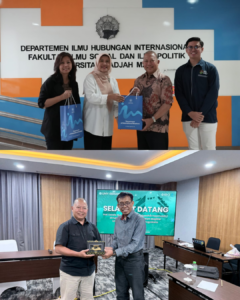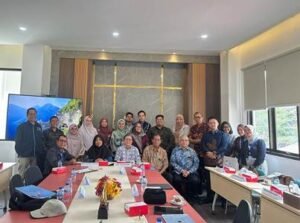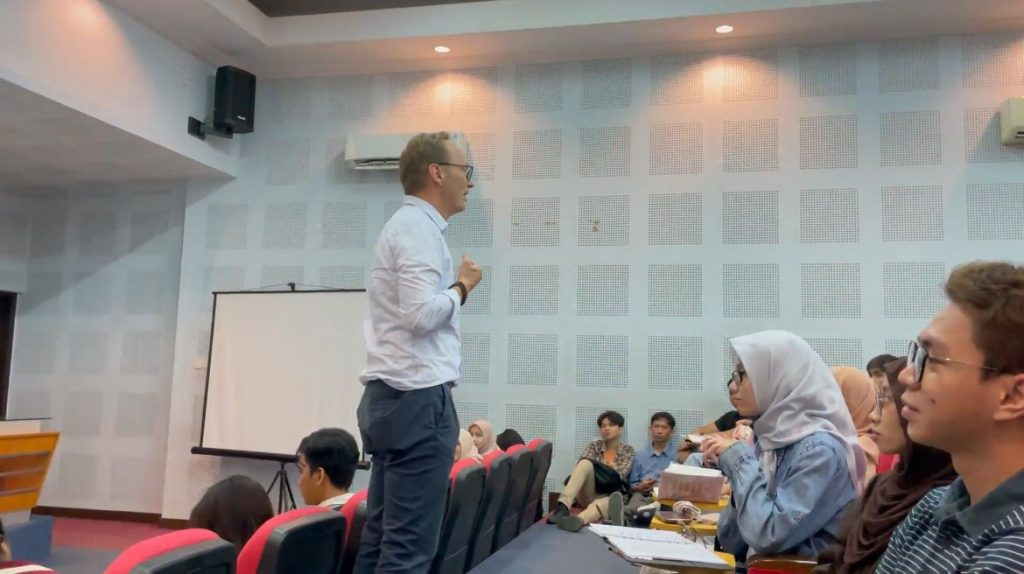
Friday, September 6, 2024, the Department of International Relations, Hasanuddin University was greatly honored by the presence of one of the senior lecturers in social research methodology from the University of Amsterdam, Mr. Dr. G.A Moerman. After taking the time to visit the Department of International Relations, Hasanuddin University on September 5 for the first time, he then returned to teach the International Relations Methodology course which will be held twice in a series of other activities while in Makassar. In his inaugural lecture, Mr. Moerman officially introduced himself and expressed his gratitude and felt honored for the opportunity given to be able to teach the methodology course for third and fifth semester students of International Relations. The opening material he presented consisted of an explanation of the basics of Science and methodology itself. He quoted the definition of science according to Pieter Sjoerd Koningsveld, a scientist and philosopher from the Netherlands. Koningsveld argued that “the objective of science is the formulation of explanatory theories concerning empirical reality”. In science, linking a theory to empirical reality can be a challenge, this is where methodology plays a role as a bridge to connect theories in the form of ideas with empirics related to real evidence.
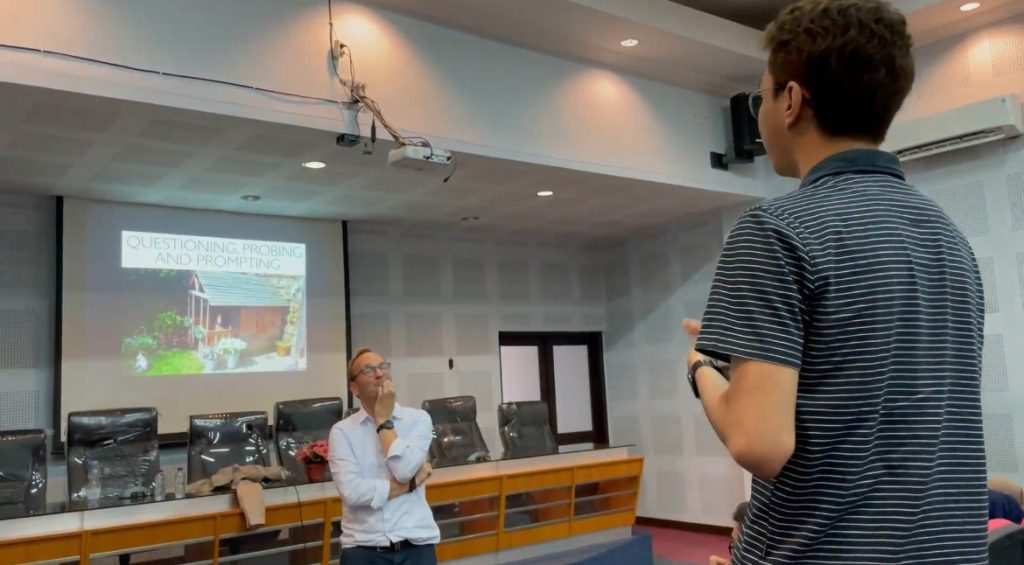
Furthermore, Mr. Moerman explained about Middle-range Theories developed by Robert K. Merton and placed between two extreme levels in sociological theory, namely Grand Theories which contain abstract theories with a broad scope, Middle-range Theories which are useful for connecting empirical evidence with a more specific scope, and Background Literature which explains in more detail about a theory. He then explained about Induction is the process of drawing conclusions with Vertical Logic, where the conclusion moves from the facts and data collected and then towards a general theory or conclusion. While Deduction moves in the opposite direction, namely by using a theory or conclusion as a reference and then using data and facts as validation or called Falsification Logic. As the end of his lecture, Mr. Moerman then explained about the application of Verification Logic which begins with observation, formulating a theory, and ends with compiling a conclusion. While Falsification logic begins with determining the problem, formulating a theory, observing and ending with evaluating the results. After completing all the materials, a question and answer session was opened to give students the opportunity to dig deeper into the application of methodology in research. The detailed explanation also closed the presentation of the material presented by Mr. Moerman in his first lecture. The next lecture is scheduled to take place in the second week with a more in-depth discussion of interviews as one of the data collection processes in research.